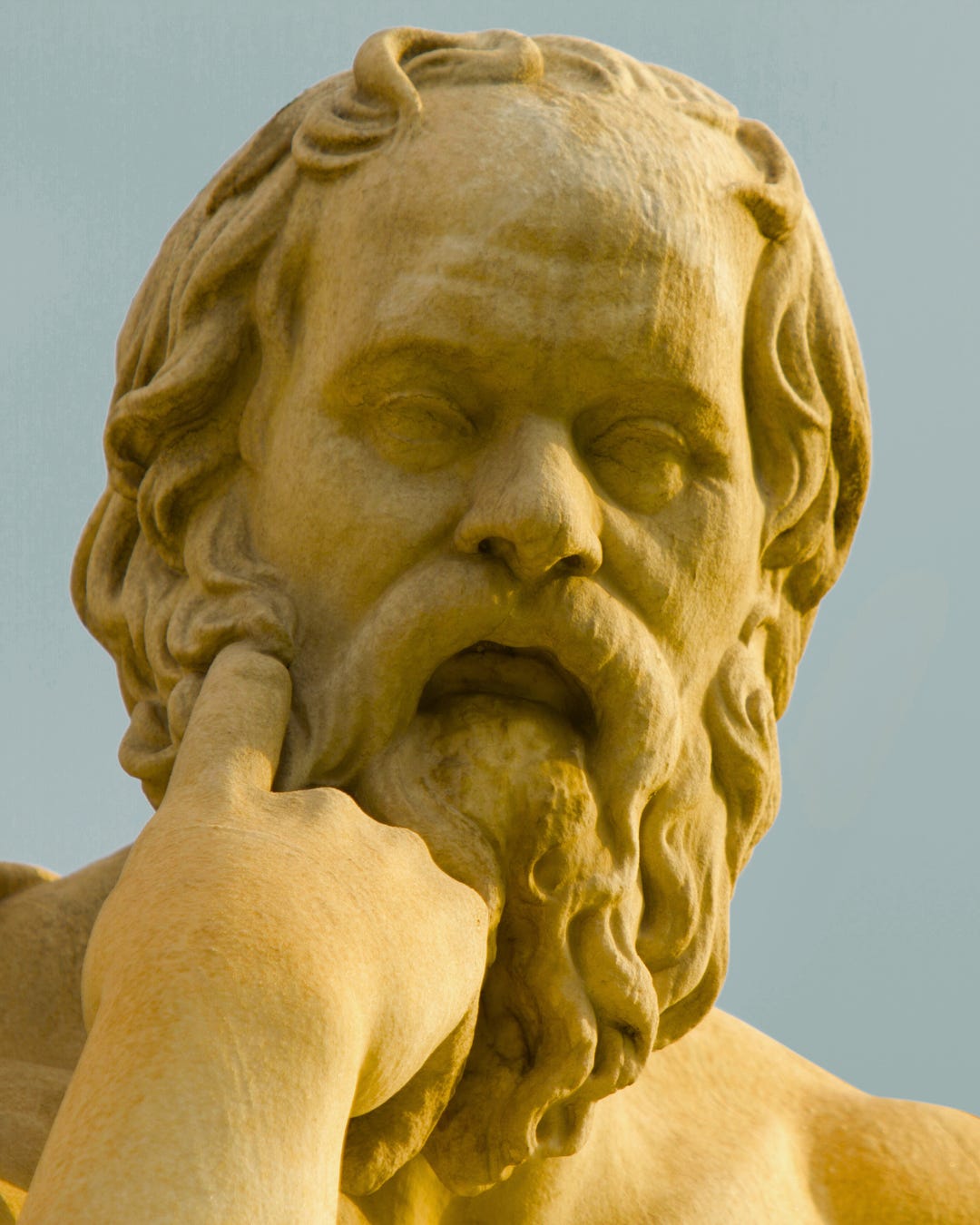
Before the word “scientist” existed, there was another term to describe those who collected observations in order to develop truly grand theories about how the world works: “natural philosopher. Newton was a natural philosopher. So was Darwin, right up until 1833, when a Cambridge professor named William Whewell coined the word “scientist” almost on a dare, and the old term started fading out of use. As the story goes, Darwin left on the Beagle a natural philosopher and came home, just several years later, something the world had just started calling a scientist instead.
Natural philosophers were known for their wide-ranging inquiry and their method. They examined an array of topics blending observation with philosophical reasoning. Before professional “science” siloed thinkers into narrow specializations generally governed by pre-existing paradigms and assumptions, natural philosophers asked big questions and started collecting observations, seeking to identify natural causes and rational explanations that did not rely upon supernatural intervention.
To be a natural philosopher is to adopt a posture toward the world that is wondering, observant, and patient enough to methodically gather a broad collection of evidence about that which one is studying.
I believe that today we need more natural philosophers, though not necessarily in the realm of physics or chemistry or plant & animal classification. What fascinates me, especially in our AI era, is a focus on human potential. I want to see more natural philosophers of human excellence - and that is precisely why this project, The Worthy Excellence Institute now exists.
This is your invitation to join in, to be part of this new “Royal Society” dedicated to exploring the nature of human excellence.
What we’re building here is primarily a discipline of noticing — trained, specific, and available to anyone willing to practice it.
Here’s a small taste of what that looks like:
Someone tells you their coworker is “incredibly disciplined.” Well, what does that mean, exactly? “Incredibly disciplined” is not really an observation. It’s an opinion, a verdict, probably arrived at quickly, maybe just to say something polite. An actual observation sounds different: she’s gone for a run at 6am every day this month, including the two mornings it rained, and I haven’t seen her miss yet. This is specific, checkable, traceable to someone’s observation, something that could be in error and contested. This is exactly what makes it valuable.
Many people never learn to tell the difference between the two sentences above. Frankly, when asked to share an observation, I’m often tempted to answer at the level of the evaluative generality, not the observation. Observing is a skill, a discipline. And unfortunately it’s not one that our culture generally encourages us to train.
Especially in our social media era, quick & confident opinion travels. Careful, checkable observation doesn’t, and the muscle for it often atrophies in those who never deliberately train it. If human excellence is worth studying, I believe it’s worth studying the way a natural philosopher would — patiently, specifically, willing to be surprised.
This brings me to the designations we’ve come up with for those who regularly read and engage with what is produced here. Not mere subscribers. We think of everyone who subscribes to this Substack (yes, even the “free subscribers”) as Patrons of Inquiry. These words are deliberate. A patron, historically, is someone who backs work that hasn’t yet proven itself to the wider world, who invests something real before the outcome is guaranteed, because they believe the inquiry itself is worth sustaining. That’s exactly what you’re doing here, only the currency isn’t money - it’s attention.
I would argue that in today’s world, attention is the scarce resource. There is more today competing for any one person’s attention than there has ever been at any point in human history, and almost none of it (especially online) is asking you to look closely at anything for very long. Choosing to read one of these essays, instead of the thousands of other things that would happily take that same few minutes from you, is a real act of patronage. You’re already doing it. That’s what makes you a Patron of Inquiry — not a purchase but an investment of attention. And I want to say here I am truly grateful
Every Patron of Inquiry is a natural philosopher in training. That’s the whole shape of what we’re building here: people practicing disciplined observation together, one month at a time, growing more capable of seeing human excellence clearly instead of just having opinions about it.
Coming soon, there will be a deeper way into this practice: Stewards of Inquiry.
Where a Patron reads and notices, a Steward brings something back and contributes in a small way to the project as a whole. Each month, Stewards will receive a specific Field Observation prompt — an invitation to bring one real, disciplined observation tied directly to that month’s question. Those observations get gathered and looked at together, and once a month, Stewards have the opportunity to meet for a live Salon, where what the community noticed gets discussed openly, patterns and disagreements alike.
This is not more content being delivered to you. It’s a practice of inquiry, conducted together, with your own noticing becoming part of the record.
More on exactly how that works is coming. For now, this is the shape of what we’re building: a place for people willing to look and then analyze and theorize, together, month after month, at something that matters.
Come look with us.